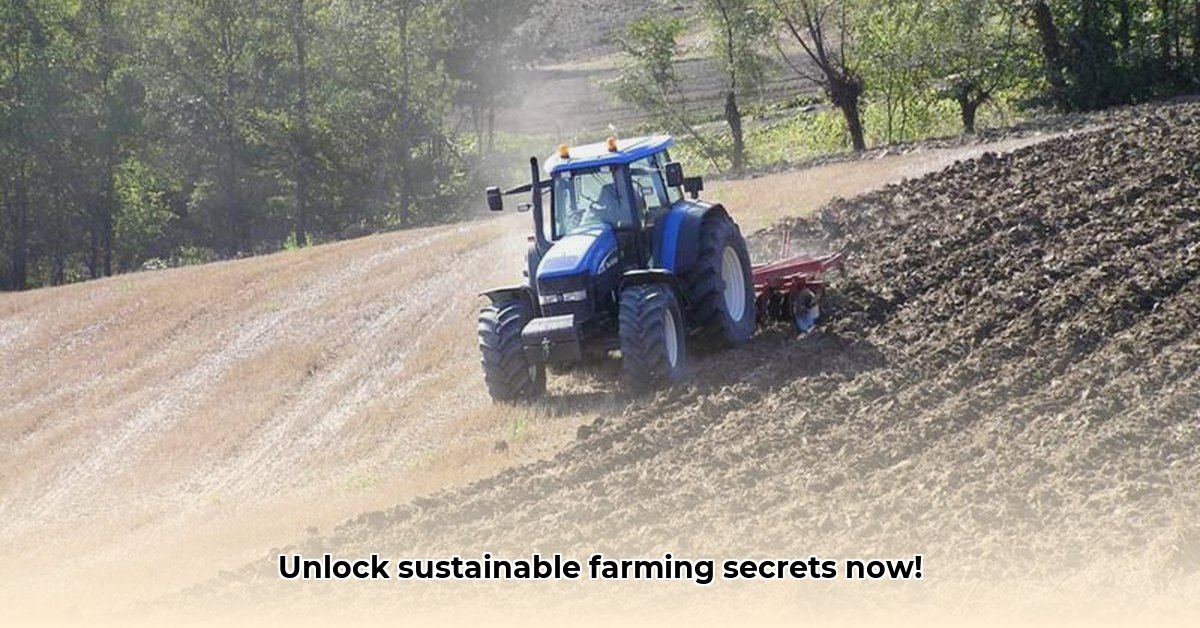
Tractor Plowing Field: Optimizing Land Management for Sustainable Agriculture
Plowing, a cornerstone of farming, has undergone significant evolution. Modern techniques aim for healthier soil, improved yields, and reduced environmental impact. This guide explores effective tractor plowing methods, catering to farmers of all experience levels, researchers, and policymakers. Choosing the right approach hinges on understanding your soil, crops, and overall farming goals. What's the best method for your farm? For more information on tractor plowing, visit this helpful resource.
Selecting the Optimal Plowing Method: Soil Type and Farming Objectives
Before starting, assess your land. Soil type dictates the appropriate technique. Heavy clay soils may benefit from deep plowing for improved aeration, while sandy soils, prone to erosion, require gentler methods. Consider your crops; crop rotation can often minimize the need for extensive plowing. Your sustainability goals – prioritizing soil health, yield maximization, or environmental impact – should also inform your choice.
Traditional Plowing: The Moldboard Plow and its Limitations
The traditional moldboard plow completely inverts the soil, burying weeds and crop residue. While beneficial for short-term soil structure improvement and weed control, this method increases erosion, especially on slopes, and disrupts the soil ecosystem. It also consumes significant fuel, impacting both costs and the environment. While effective for compacted soils, its drawbacks warrant careful consideration. Is the immediate benefit worth the long-term environmental cost?
No-Till Farming: A Sustainable Approach to Soil Management
No-till farming revolutionizes soil management by minimizing disturbance. Crop residue remains on the surface, shielding the soil from sun and rain, reducing erosion and improving moisture retention. Planting occurs directly into this protective cover. This method promotes long-term soil health, reduces fuel consumption, and decreases erosion. However, effective weed control is paramount, often necessitating herbicides or cover crops. How effective is this in various climates and soil types?
Conservation Tillage: A Balanced Approach
Conservation tillage occupies a middle ground, minimizing soil disruption through techniques like chisel plowing or strip-tilling. This balances soil health benefits with improved weed control compared to no-till, making it adaptable for diverse soil types and cropping systems. It presents a practical compromise between complete soil inversion and zero disturbance. What are the trade-offs between yield and environmental preservation?
A Step-by-Step Guide to Successful Tractor Plowing
The specifics vary based on your chosen method and equipment, but these steps provide a general framework:
Field Scouting: Assess soil moisture, texture, and potential obstacles (rocks, debris) to determine the appropriate plow and settings. Careful pre-planning saves time and resources later.
Equipment Selection: Choose a plow suited to your soil type and chosen method (moldboard, chisel, no-till planter). The right tools are crucial for efficiency and soil health.
Pre-Plowing Preparation: Remove significant obstacles. Soil testing informs fertilizer application for optimized results, improving nutrient uptake and overall yields.
Plowing Execution: Adjust tractor settings according to soil conditions and the selected plow, maintaining consistent depth and speed for even results. Careful execution is key for optimal plowing.
Post-Plowing Inspection: Examine your work for unevenness, addressing any issues for a consistently tilled field. This step ensures even crop growth and optimal resource allocation.
Comparing Plowing Methods: Advantages and Disadvantages
Selecting the best method requires analyzing your specific circumstances.
| Method | Advantages | Disadvantages |
|---|---|---|
| Traditional Plowing | Efficient weed control, short-term soil structure improvement | High fuel consumption, increased erosion, disrupts soil biodiversity |
| No-Till Farming | Reduced erosion, long-term soil health improvement, water retention | Demands careful weed management, may necessitate herbicide use |
| Conservation Tillage | Balances soil health and weed control, lower fuel use | May be less effective at controlling weeds than traditional plowing |
Dr. Emily Carter, Soil Scientist at the University of Nebraska-Lincoln, notes: "The optimal plowing technique is highly context-dependent. Factors such as soil type, climate, and crop selection significantly influence the best approach for sustainable agriculture.” Choosing the right method is a key decision.
Long-Term Impacts on Soil Health: No-Till vs. Traditional
Long-term studies indicate that no-till farming surpasses traditional tillage in several key areas after an initial transition period. While initial yields might be comparable or slightly lower, no-till eventually leads to higher yields, greater profitability, improved soil health, and reduced greenhouse gas emissions. However, regional variations and climate require adaptable strategies.
"No-till farming's long-term benefits are undeniable,” says John Miller, a farmer from Iowa with 20 years of no-till experience. “But transitioning takes planning and patience."
Practical Steps for Transitioning to No-Till Farming
Transitioning requires a phased approach:
Assessment: Evaluate your soil, climate, and current practices.
Planning: Research suitable equipment and crop rotation strategies.
Implementation: Begin with a small test area to refine techniques.
Monitoring: Closely track soil health, yields, and costs, adapting as needed.
Adaptation: No-till requires continuous adaptation based on observation and data.
Addressing Challenges in No-Till Farming:
Weed management intensifies, initial equipment costs are higher, and initial yields may be slightly lower. Strategic planning, alternative weed control methods (cover crops, targeted herbicides), and patience are crucial.